Straight answerA German wasp nest is the job to leave to a pest controller. The nest is covered, often hidden underground or in a cavity, and a healthy one raises 11,000 to 13,000 workers in a season. Disturb it and wasps defend an area of about 7 metres. A visit usually takes under an hour, and the nest normally dies within a day of treatment.
How do you know it is a German wasp nest?
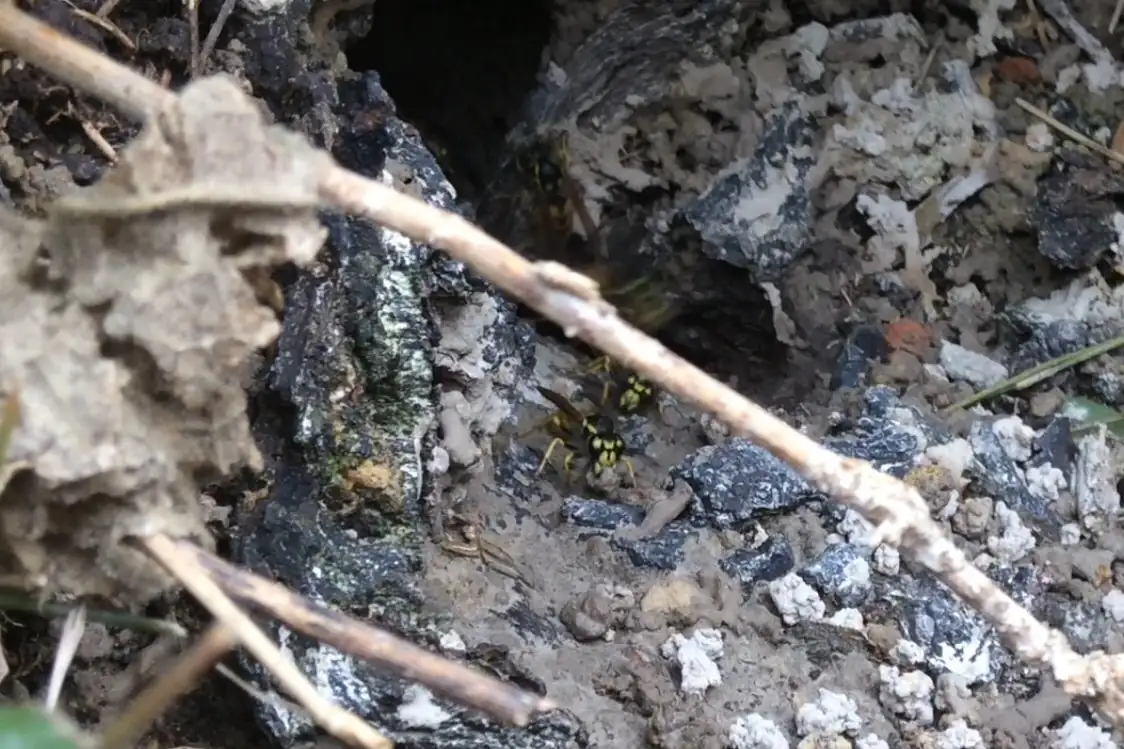
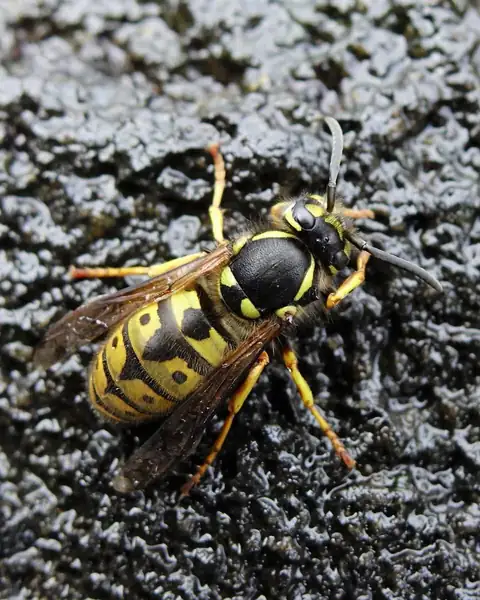
Look for a stream of wasps going in and out of one small hole. German wasp nests are wrapped in grey paper made from sound wood, so you rarely see the comb. The entrance is in a bank, lawn, wall, roof or hollow tree. Paper wasps are different: their open comb hangs in plain sight. Common wasps look almost the same as German wasps and are handled the same way. Our German wasp guide shows the face marks.
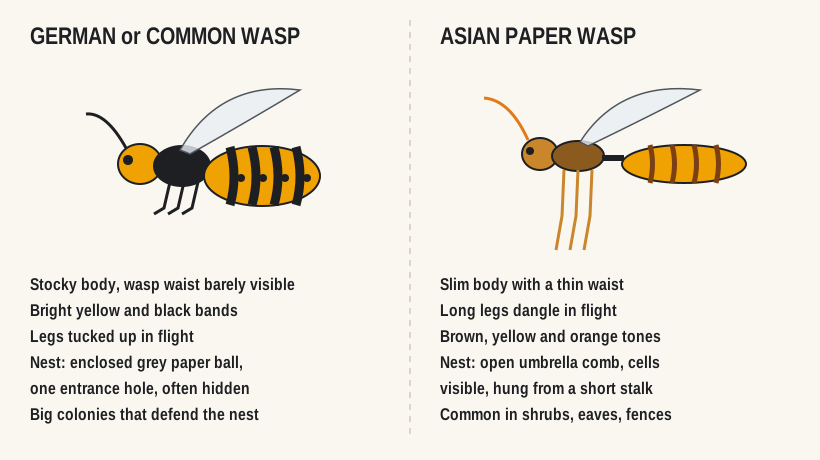
Why a German wasp nest is harder than a paper wasp comb
Numbers and hiding places make the difference. A paper wasp comb holds hundreds of wasps at most and sits in the open. A German wasp nest holds thousands, and the comb is out of sight behind soil, cladding or ceiling lining. The treatment has to reach the comb inside, not just the wasps at the door. That is why sprays from the supermarket so often fail and stir the colony up.
- Ground nests can run a long way back from the entrance hole
- Wall and roof nests can sit metres from where the wasps go in
- About 10% of German wasp nests in New Zealand survive winter and keep growing
- A nest raises new queens in late summer, which is why late treatment matters less than early
What happens on the visit
The pest controller finds the entrance and checks how far the nest is likely to run. Most treat with an insecticide dust puffed into the entrance, often late in the day when foragers are home. The wasps carry the dust through the nest. For a cavity nest, a second entry point may be needed from inside the roof space or wall. The full removal process covers what happens to the dead nest.
- You tell us where the wasps go in and how high it is.
- A pest controller looks at the nest and quotes in writing.
- The entrance is treated with a registered product, used to its label.
- You keep people and pets back until you are told the area is clear.
- If wasps are still busy after a day or two, the pest controller checks it again.
What German wasp nest removal costs
Published Auckland prices for one nest mostly run from about $120 to $350. A ground nest by a path sits near the low end. A nest inside a wall, deep in a roof void or up high costs more, often $200 to $350, because it takes longer and may need ladders or access from inside. See the cost guide. These are a guide, and your price is confirmed in writing after the nest is seen.
When is the best time to deal with it?
As soon as you find it. A spring nest is the size of a golf ball or orange with a handful of workers. By February it can be the size of a soccer ball with thousands. The University of Auckland's Professor Jacqueline Beggs points to January and February as a good time to kill nests, before they release new queens. Earlier is simpler again.
What not to do
Don't pour petrol or boiling water in the hole, set it alight, block the entrance or hit it with a hose. These rarely reach the comb and send angry wasps looking for the cause. Don't mow over or trim near a ground nest. If someone in the house reacts badly to stings, keep them well away and keep their prescribed autoinjector close. A bad reaction is a 111 call.
Prices, timing and how a visit is booked all start from Waspari.
Questions people ask
Are German wasps and common wasps treated the same way?
Yes. They build the same covered paper nests in the same places and defend them the same way. The pest controller treats the entrance so the product reaches the comb inside. Only the colour of the paper differs: grey for German wasps, brown for common wasps.
Can a German wasp nest come back the next year?
The same nest usually dies in late autumn, though about 10% survive Auckland-style mild winters and keep growing. A new nest in the same bank or roof is a different colony started by a new queen. Sealing old gaps after the nest is dead makes a repeat less likely.
Do I need to be home for the visit?
Not always. For a ground nest or an outside wall the pest controller only needs safe access and a clear idea of where the entrance is. For a roof or wall cavity nest you will usually need to be there to open the ceiling hatch.
Sources we checked
- Life cycle of a wasp (Manaaki Whenua Landcare Research)
- Wasp FAQ (Manaaki Whenua Landcare Research)
- Wasps (Department of Conservation)
- Wasp control (Manaaki Whenua Landcare Research)
- Wasp numbers explode after long hot summer (2025) (University of Auckland)
Last reviewed 2026-11-05.