
Straight answerBirkenhead and Northcote face the harbour on the Kaipatiki side of the North Shore. Bush gullies run between the streets, and some houses are well over a century old. German wasps dig into the clay banks of those gullies and move into older roof spaces. Paper wasps build under eaves and deck rails. The 2025 hornet finds were just up the road, so it pays to look twice.
Living next to the hornet search area
DOC says most yellow-legged hornets found in Auckland were in the Glenfield and Birkdale areas. By the middle of 2026 no new hornets or nests had been found since early April. Monitoring goes on, because queens that survived winter could start nests in spring. In Birkenhead, a normal German wasp is still far more likely. A hornet is about twice that size, mostly dark, with yellow leg tips. Glenfield and Birkdale has more on the response.
Kauri remnants and gully reserves
Before farming, this land was kauri forest with pohutukawa on the coast. Remnants survive in Kauri Park, Le Roys Bush, Kauri Point Domain, Kauri Glen and Eskdale Reserve. In Northcote, Smiths Bush in the Onewa Domain holds kahikatea and taraire. Those reserves reach deep into the suburbs along steep valleys.
German wasps forage through the bush all summer and nest in sunny, dry banks at its edge. Sections that drop into a reserve often have a nest under the back fence or in a cut bank. DOC suggests looking on sunny days near dawn or dusk, when low light shows the flight path. Ground nests explains how to spot one safely.
If the nest sits inside a public reserve, report it to Auckland Council rather than tackle it. If it is inside your boundary, it is yours to arrange, even when the wasps feed in the bush.
Sugar-works houses around Chelsea
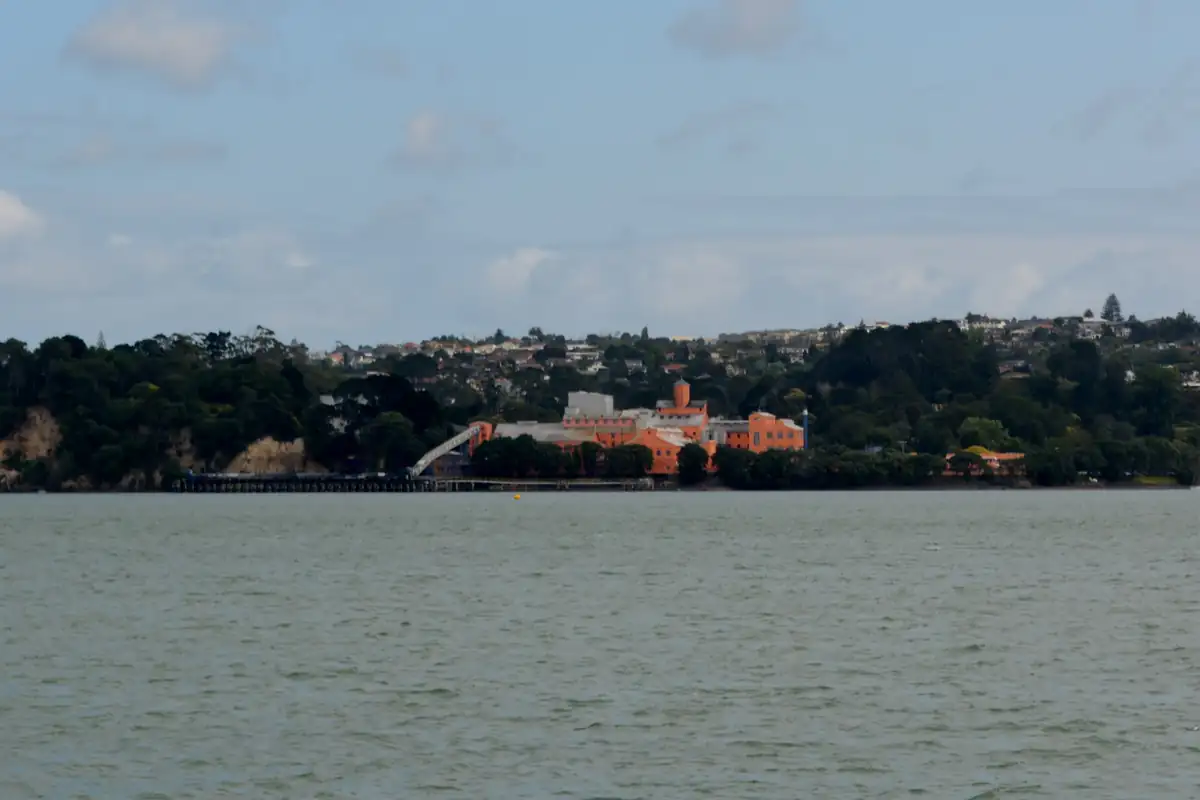
The Chelsea Sugar Refinery opened in 1884, on deep water beside Duck Creek. It shaped the whole suburb. From 1910, company loans helped workers build or buy homes. Those loans financed over a third of Birkenhead's new houses up to 1926. Many sit in the streets around the refinery, such as Colonial Road and Huka Road. Cottages from the first company village were moved into older Birkenhead streets.
Houses of that era often have timber framing, low roof spaces and many small additions. German wasps use gaps at the eaves, old vents and loose scribers. A roof nest can reach a large size by March. Read roof nests before going into the ceiling space yourself.
The refinery has long let the public walk its grounds, which hold wetlands, lakes, open space and bush. Water and shelter like this suit foraging wasps in summer. If you find a nest beside a path there, tell the landowner and keep walkers away from it.
Strawberry fields to suburbs
Birkenhead was fruit country from the 1860s. Apples, pears and strawberries grew in the poor clay soil, and by the 1890s day-trippers came for the strawberry season. The last commercial strawberry fields went in the 1940s. Birkenhead stayed semi-rural until the bridge, then grew fast in the 1960s and 1970s.
That clay still matters. It sets hard on a dry bank, and German wasps can dig a nest into it easily. Look for a neat hole with steady traffic in a sunny cut bank, garden terrace or driveway edge.
- RefineryOpened 1884
- BushKauri reserves and gullies
- Watch forGround nests on gully banks
- Hornet findsNext door, report to MPI
Northcote Point villas and Northcote Central
Northcote Point grew as a ferry commuter suburb between 1880 and 1910. Many villas from the 1880s still stand there. After the Harbour Bridge opened in 1959, the shops and growth moved to Northcote Central. A small state housing area went up there in the 1950s, and farmland was turned into suburbs.
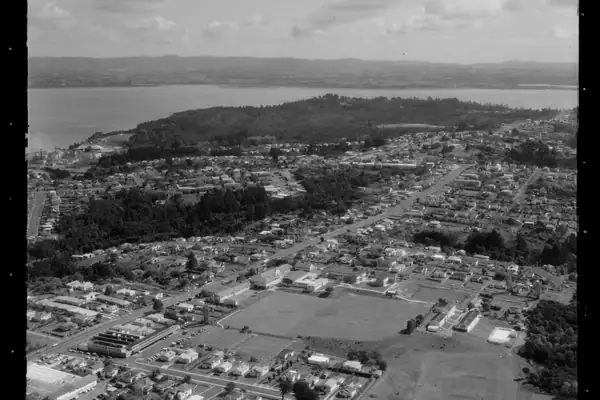

So Northcote mixes old villa roofs with mid-century weatherboard and brick homes. Paper wasps favour the eaves of both. In the older houses, German wasps also nest in the subfloor through broken base boards.
Northcote also has two old volcanic craters on its eastern shore, Tank Farm and Onepoto. Onepoto Basin was drained in the 1960s and redeveloped for recreation. Open ground like this, next to homes, gives foraging wasps plenty of room in summer.
Steep sections, decks and retaining walls
After the bridge opened, harbour views became the selling point. Many homes now sit on sloping sections with decks, retaining walls and terraced gardens. The clay soil here was hard to farm, and it still bakes dry on a north-facing slope. Wasps nest behind timber retaining walls and under decks. Nests under decks covers the safe way to check.
New homes in Northcote
In the late 2010s and 2020s, Northcote began an urban regeneration and housing intensification project. That means more new townhouses and apartments. New buildings have fewer old gaps, but vents, soffits and new planting still attract nests. Tenants should tell the landlord quickly. Rental property nests explains who arranges what.
Birkenhead and Northcote price guide
Most nests here sit inside the Auckland guide range of about $120 to $350 per nest. A small paper wasp comb under an eave is at the low end. A German wasp nest in a steep gully bank or deep in a villa roof costs more, because access is harder. Treat these as guide figures. The written quote from the pest controller sets your actual price. See the cost guide for what changes it.
Getting someone out to Kaipatiki
Tell us the street, where the wasps go in, and whether your section backs onto a reserve. Note any steep steps or a locked side gate. A local technician comes to you, with a written quote before work starts. Use the form on the quote page or call 09 942 7069. If wasps are inside, keep that room shut and read wasps in the house.
Every other suburb is covered as well. Go back to Auckland wasp nest removal for prices, timing and the booking steps.
Questions people ask
Is a big wasp in Birkenhead likely to be a hornet?
Most large wasps here are still German wasps or queens in spring. Yellow-legged hornets were found mostly in nearby Glenfield and Birkdale. If you see one that is mostly dark with yellow leg tips, report it to MPI on 0800 80 99 66.
There is a nest beside a track in Kauri Glen. Who handles it?
A nest inside a public reserve is for Auckland Council to deal with. Note the track and the spot, keep people away, and report it to the council.
Do you cover Chatswood, Beach Haven and Hillcrest too?
Yes. We take requests from every Kaipatiki suburb and the rest of the North Shore.
Sources we checked
- Birkenhead (Wikipedia)
- Northcote (Wikipedia)
- Chelsea Sugar Refinery (Wikipedia)
- Yellow-legged hornet (Department of Conservation)
- Wasps (Department of Conservation)
Last reviewed 2026-11-05.