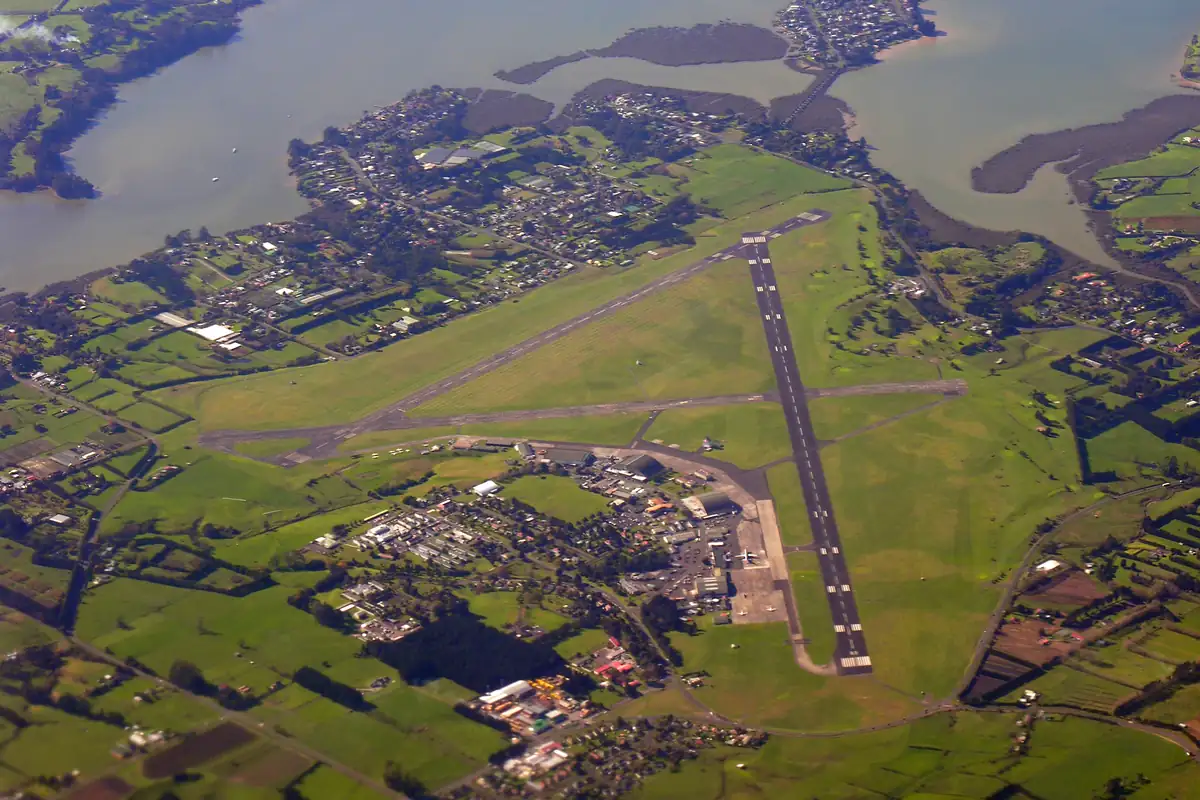

Straight answerWhenuapai, Hobsonville and West Harbour sit on low peninsulas in the Upper Waitemata Harbour. Within a few streets you can pass farm paddocks, an air base, 1930s officers' houses and homes finished last year. Wasps use all of it. German wasps nest in banks, sheds and wall cavities, and paper wasps hang combs under eaves and fences.
Air force land on both sides
The government took land at Whenuapai in 1938 for a bomber base. From 1945 to 1965 it was also Auckland's international airport. Hobsonville was an air force base from 1929 to 2001. The two were joined in 1965 as RNZAF Base Auckland, which still operates at Whenuapai.
Whenuapai itself was settled late. Poor soil around the Wallace and Waiarohia inlets kept farmers away until better methods arrived. A group of pacifist settlers formed a community here from 1911. The Whenuapai statistical area now also takes in Herald Island, on the upper harbour.
Wide mown verges, shelter belts and open paddocks around the airfield give German wasps plenty of room. Nests turn up in banks, fence lines and the base of old trees on private land beside it.
A nest inside the base fence is for the base to handle. We take requests for homes, rentals, farms and businesses outside it. If your boundary meets defence land, mention it so the technician knows which side the nest is on.
Hobsonville Point: new homes, new gaps
The old Hobsonville airfield was sold to Housing New Zealand in 2002. The plan grew from 3,000 homes to 4,500 by 2019, and private builders put up the houses. Since 2015, most of Scott Point has also gone from rural to suburban. Many streets here are very recent.
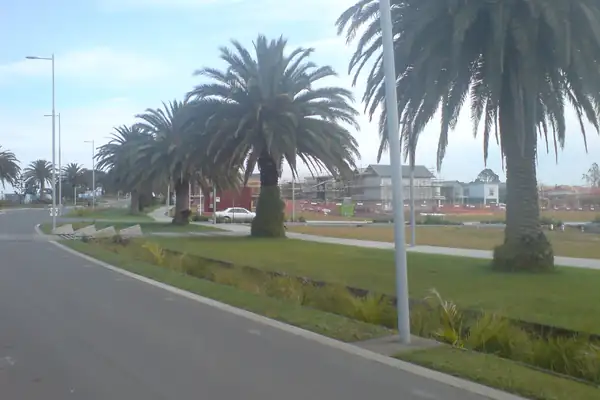

New houses still give wasps a way in. Wall vents, soffit gaps and service penetrations can lead into a cavity. A nest in the wall often shows as wasps at one small spot, or a faint chewing sound inside. Wall nests explains why you should not seal the hole first. Fresh bark mulch and new hedges also suit paper wasps in spring.
Airfield-era houses and hangars
Hobsonville kept many 1920s and 1930s buildings from the air base. Junior officers lived on Sunderland Avenue, in homes built about 1937. Married officers' houses on Marlborough Crescent date from 1925 to 1936. Clarks Lane keeps five workers' cottages and a villa from the pottery days, built 1902 to 1928.
These older houses have the roof spaces and timber gaps that German wasps like. A summer nest in one can grow large before anyone notices. See roof nests for the signs.
Clark House and a few other Hobsonville buildings were made from hollow ceramic blocks, a local experiment. Clark House is listed Category I. If a nest is in a heritage building, say so when you book. The technician can then plan access without drilling or lifting old material.
- Air baseWhenuapai since 1938
- New housingHobsonville Point from 2002
- Common findWall cavity and bank nests
- Base landInside the fence is theirs
Clay soils and the pottery bays
When surveyors saw Hobsonville in 1840, they described sour red and white clay. That clay fed a pottery industry for decades, at places now called Limeburners Bay, Brickbat Bay and Pottery Creek. Broken pottery still turns up on the Limeburners Bay shore.
Dry clay banks along coastal paths and cut sections are good ground-nest sites. Look for a steady line of wasps going into one hole, often on a sunny slope. Keep children and dogs away from it. Ground nests covers what to do.
West Harbour, the marina and Manutewhau bush
Most of West Harbour was built in the 1980s and 1990s. Its reserves include Luckens Reserve and the Manutewhau Walk Reserve, native bush along the Manutewhau Stream next to Moire Park. Hobsonville Marina holds about 600 boats.
Bush edges give German wasps food and nest banks. Paper wasps often build under boat covers, in sheds and on gear that sits untouched for weeks. Check before you pull back a cover in summer.
West Harbour homes from the 1980s and 1990s now have mature gardens. Thick hedges, climbers on fences and garden sheds are common nest spots. A shed that is opened only now and then can hold a comb by the door frame.
Schools, playgrounds and new parks
The new suburbs brought new schools. Hobsonville Point Primary opened in 2013 and the secondary school in 2014. Scott Point School opened in temporary buildings in 2021. Hobsonville School dates from 1875. Fresh landscaping and young hedges around these grounds suit paper wasps in spring.
If a school, early childhood centre or sports club finds a nest, keep children clear of the spot and book a visit. School and business visits explains how timing works around class hours.
Paddocks and lifestyle blocks around Whenuapai
Whenuapai still has farmland, and some rural sections remain in Hobsonville. Tobacco was grown here until about 1940, and Hobsonville had market gardens after the war. On a block, nests turn up in hay sheds, under water troughs, in hedgerows and in paddock banks. In a mild winter, a nest can survive and keep growing. Lifestyle block visits explains how larger properties are handled.
Whenuapai and Hobsonville prices
Most nests here fall inside the Auckland guide range of about $120 to $350 per nest. A paper wasp comb on a fence is at the low end. A German wasp nest in a wall cavity, a paddock bank or a shed roof can sit nearer the top. Those are guide figures only. The pest controller's written quote sets the price. The cost guide lists what moves a price up or down.
Booking a visit in the north-west
Tell us the street, the type of building, and where the wasps go in. For a block, say which paddock or shed. A local technician comes to you, and there is nothing to drop off. Use the form on the quote page or call 09 942 7069. Further out, see Kumeu and Huapai.
The Upper Harbour Bridge links Hobsonville to Greenhithe, and the Upper Harbour Motorway opened in 2011. That makes the north-west an easy run from the North Shore side as well. Tell us if the job is on a rural road with a long driveway or a gate code, so the technician arrives ready.
Every other suburb is covered as well. Go back to Waspari's Auckland nest visits for prices, timing and the booking steps.
Questions people ask
The nest is near the air base fence. Who deals with it?
If the nest is inside the base fence, the base handles it. If it is on your side, it is yours to arrange, and we can book a local technician.
Our Hobsonville Point house is brand new. How did wasps get in?
Queens look for any dry, sheltered gap in spring. A wall vent, soffit gap or pipe entry is enough. New houses get nests too, often in the wall cavity.
Do you cover Herald Island, Scott Point and Brigham Creek?
Yes. We take requests from Whenuapai, Herald Island, Hobsonville, Scott Point, West Harbour and nearby rural roads.
Sources we checked
- Whenuapai (Wikipedia)
- Hobsonville (Wikipedia)
- West Harbour (Wikipedia)
- Wasps (Department of Conservation)
Last reviewed 2026-11-05.