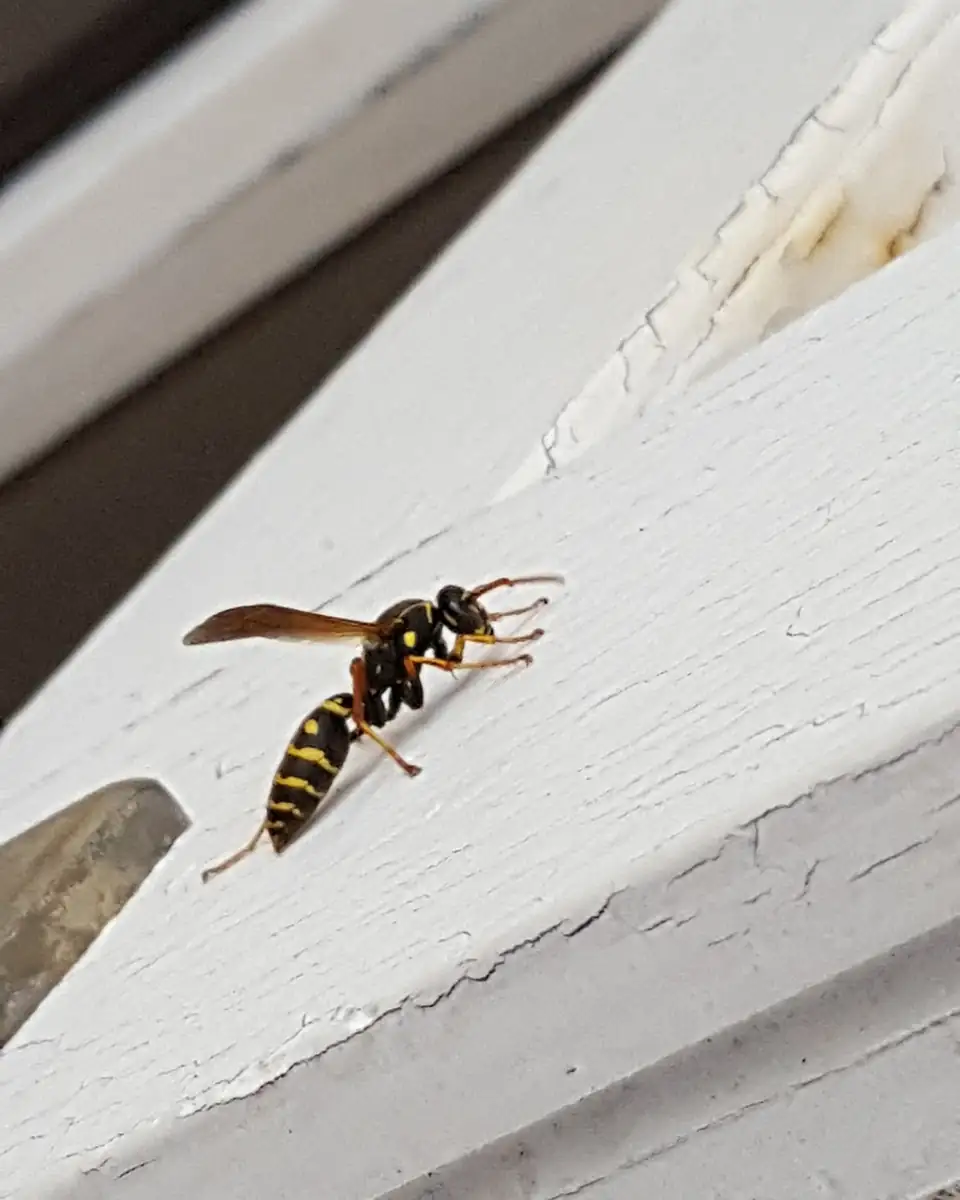
Straight answerA single wasp indoors has usually flown in through an open door or window. Several wasps a day, often at the same window or light fitting, usually means a nest in the roof space, a wall cavity or the eaves nearby, with wasps finding their way in through a gap. Find where they come from outside, keep the room shut, and have the nest treated from the outside entrance.
Where do wasps inside the house come from?
Most come from a nest in the building. German wasps nest in roof spaces, wall cavities and under floors. Some workers wander inward instead of outward and end up at a window, a downlight or a ceiling vent. Paper wasp combs under the eaves can also send wasps in through an open window. Watch the outside walls on a warm day for a flight line.
- Wasps at one window or skylight, day after day: a nest in that wall or roof area
- Wasps near downlights, extractor fans or the ceiling hatch: a roof-space nest
- Wasps near a chimney or wood burner: a nest in the flue area or the roof beside it
- Wasps only when windows are open: probably foragers from outside
Find the entrance from outside
Stand back on a warm, still afternoon and watch the roofline, soffits, gaps in weatherboards, vents and around pipes. A nest entrance has a steady stream of wasps flying straight in and out. Note the wall, the height and what is near it. That is what the pest controller needs to quote. Our roof and wall cavity pages explain each one.
What to do inside right now
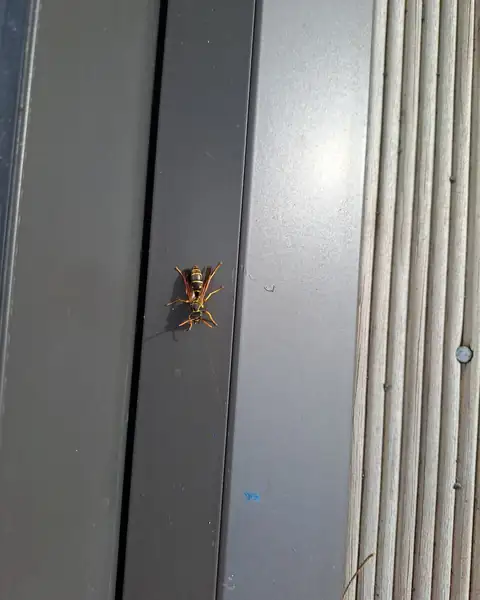
Keep the affected room closed and put a towel along the door. Don't open the ceiling hatch to look, and don't spray into ceiling vents or light fittings. Sprays can push wasps into the room. Swat or trap a stray wasp with a glass and card if you are calm about it, or leave the room and let it find the window. Keep anyone who reacts badly to stings out of that part of the house.
How the nest is treated
The pest controller treats the outside entrance first, because that is where the wasps go in and out. If the nest is reachable from the roof space, it may be treated there too. After the colony dies a few stragglers can turn up indoors for a day or two. Once it is quiet the gap can be sealed. A dead nest in a closed cavity is usually left where it is.
What it costs
Nests inside the building are the harder end of the published Auckland range: often $200 to $350, against about $120 for a simple outdoor nest. Height, roof access and the need to find the nest from inside all add time. It is a guide; you get your price in writing after the nest is seen. See the cost guide.
Prices, timing and how a visit is booked all start from wasp nest removal in Auckland.
Questions people ask
Why are there wasps in my house in winter?
Queens look for dark, dry places to spend winter, and some end up in roof spaces and wall linings. On a warm day they can wake and wander indoors. A single slow, large wasp in winter or early spring is usually a queen, not a sign of a big nest.
Can wasps chew through a ceiling?
A large nest can expand into soft ceiling lining. If you see a damp-looking or bulging patch of ceiling with buzzing behind it, keep the room shut and call for help. Don't push on it.
Are wasps at the window trying to get out?
Usually yes. Wasps head for light, so they gather at windows. That tells you they came from inside the building, not from outside.
Sources we checked
- Life cycle of a wasp (Manaaki Whenua Landcare Research)
- Wasp control (Manaaki Whenua Landcare Research)
- Wasps (Department of Conservation)
- Wasp FAQ (Manaaki Whenua Landcare Research)
Last reviewed 2026-11-05.