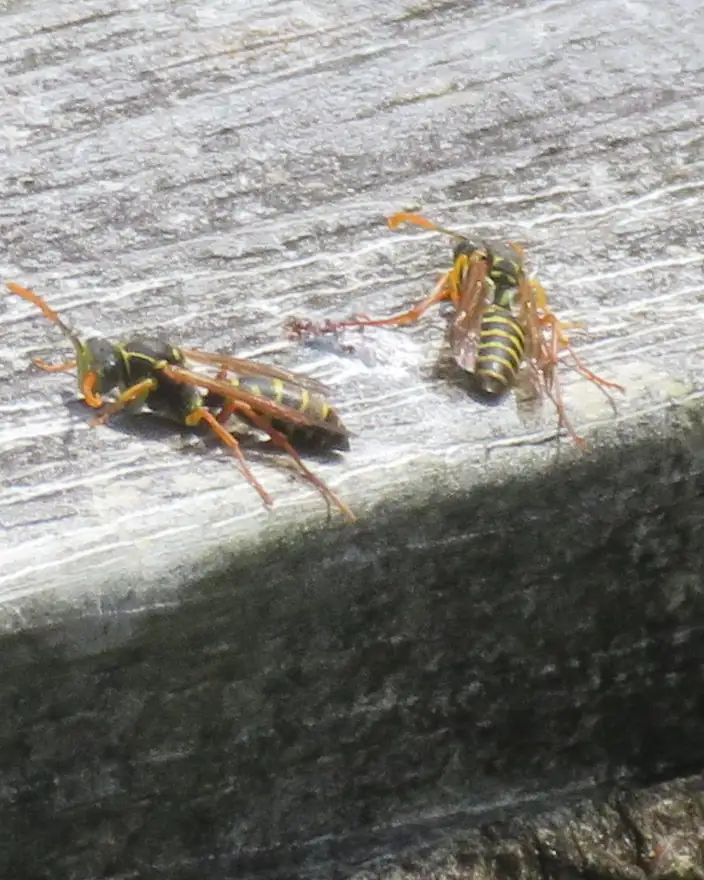
Straight answerA wasp nest under a deck is either a paper wasp comb hanging from a joist or rail, or a German wasp nest in the soil or void below the boards. Watch from a few metres away on a warm afternoon. Wasps landing on an open comb mean paper wasps. Wasps pouring in and out of one gap between boards or under the steps mean a covered German wasp nest, and that one needs a pest controller.
Why decks attract wasps
A deck gives wasps shelter, dry soil and wood to chew. Paper wasps hang combs from the underside of rails, bearers and outdoor furniture, out of the rain. German wasps use the dry, dark ground under a low deck the way they use a bank. Weathered, untreated timber is also a wood-fibre supply, and you will often see paper wasps scraping grey rails and pergola posts.
Paper wasps or German wasps under the deck?
The nest decides the job, so get a look without leaning in. An open, grey comb you can see into is a paper wasp nest. If you see no comb at all, just a steady stream of wasps through one gap, assume a covered German or common wasp nest. Those can hold thousands of wasps by February. The identification guide helps if you are unsure.
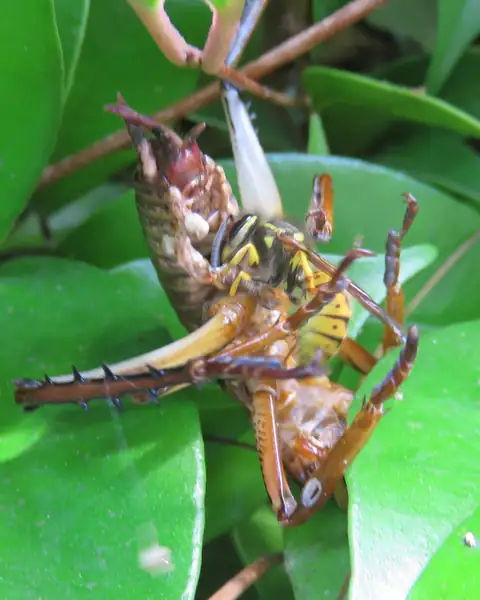
- Wasps landing on an open comb on a joist or rail: paper wasps
- A busy flight line through one gap between boards: German or common wasps
- Wasps going under the bottom step or the deck edge at soil level: likely a ground nest
- A loud hum through the boards on a hot day: a large colony, keep everyone off the deck
What not to do
Don't spray through the boards, lift boards over the nest or block the gaps. Spray through a gap seldom reaches a covered nest, and lifting a board drops you right on top of it. Keep children and dogs off the deck and the lawn below it. If the deck is the only way out of the house, use another door until the nest is dealt with.
How the job is done
For a paper wasp comb the pest controller reaches it from below or through a gap, treats it, and takes it down. For a German wasp nest the entrance is dusted, usually late in the day. Low decks with no crawl space take longer, because the entrance and the nest may be some distance apart. Sometimes a board has to come up after the wasps are dead to remove the nest. Read ground nests for the soil version.
What it costs
Expect the usual published Auckland range of about $120 to $350 per nest. A comb on a rail you can reach from the lawn is near the low end. A covered nest deep under a low deck, or one that needs boards lifted, costs more. These are a guide; your price is confirmed in writing after the nest is seen. More on what moves the price.
Stopping the next one
Once the nest is dead and gone, check the deck in early spring. That is when queens look for sites, and a starter comb is the size of a walnut. Seal the gaps you can at soil level, keep under-deck storage tidy, and replace or paint very weathered rails that paper wasps keep scraping.
Prices, timing and how a visit is booked all start from the Waspari front page.
Questions people ask
Will wasps under a deck come up through the boards?
They use the gaps they already have. Wasps defend the area around the nest, so walking on the deck above a busy nest can set them off. Keep off the deck until the nest has been treated.
Can I wait until winter for the nest to die?
Most nests die in late autumn, but by then a German wasp nest has spent months growing and has released new queens. If people use the deck, waiting through February and March is the riskiest choice.
Sources we checked
- Life cycle of a wasp (Manaaki Whenua Landcare Research)
- Asian paper wasp (Manaaki Whenua Landcare Research)
- Wasps (Department of Conservation)
- Wasp control (Manaaki Whenua Landcare Research)
Last reviewed 2026-11-05.