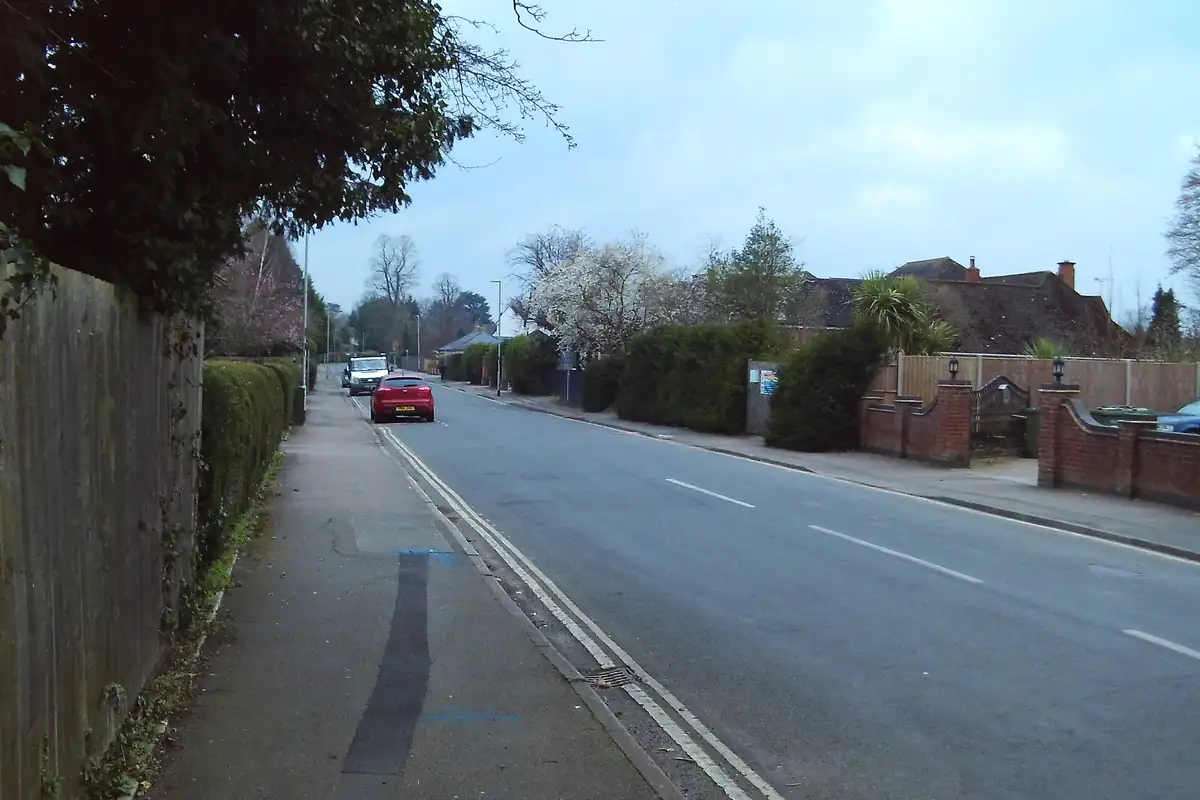

Straight answerGlenfield and Birkdale sit on the Kaipatiki side of the North Shore: hilly streets of 1960s and 1970s homes that back onto bush gullies and creeks. German wasps nest in those gully banks and in the roof spaces of older houses, and paper wasps hang combs in hedges. This is also where yellow-legged hornets were found in 2025, so any unusually large dark wasp here goes to MPI first.
Why the hornet matters here first
DOC says most yellow-legged hornet detections were in the Glenfield and Birkdale areas after the first finds in October 2025. By mid-2026 no new hornets or nests had been found since early April, but monitoring continues because overwintered queens could start nests in spring. Normal German and paper wasps are still the everyday problem; it just pays to look twice.
- Yellow-legged hornet: 2 to 3 cm, mostly dark, yellow leg tips, orange band near the tail
- German wasp: about half that size, bright yellow and black
- Asian paper wasp: slim, long dangling legs, open grey comb
What Glenfield housing means for nests
Most of Glenfield was built in the 1960s, when the Harbour Bridge opened the North Shore to commuters, and the population more than doubled between 1961 and 1966. Many of those houses have tile or iron roofs with soffits, timber or brick cladding and subfloors. German wasps use gaps at the soffit and vents in the base boards; paper wasps use the eaves themselves.

The gullies and creek edges
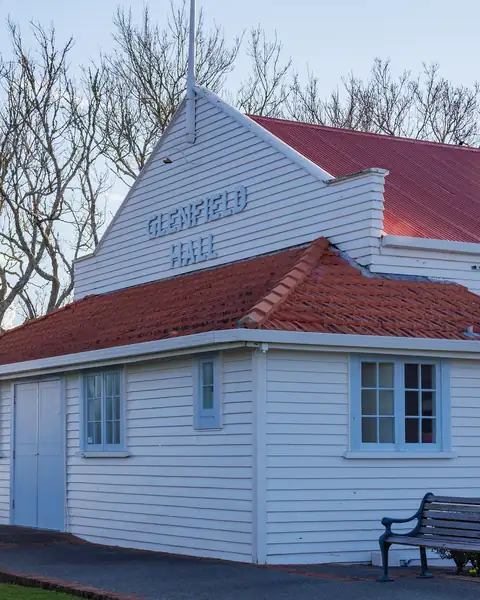
Kaipatiki Creek runs along the suburb's northern side into Hellyers Creek, and reserves of regrowth bush fill the valleys between streets. Banks along these gullies are prime ground-nest country: sunny, dry, well drained. Sections that drop into a reserve often have a nest on the slope at the back fence, found when someone mows or weeds. See ground nests for the signs.
Whose nest is it on the boundary?
If the nest is inside a council reserve, report it to Auckland Council on 09 301 0101; the council controls wasps on its own land. If it is on your side of the fence, it is yours to deal with, even when the wasps forage in the reserve. Steep back sections can mean a longer job, because the pest controller needs a safe footing.
- BuiltMostly 1960s, west later
- TerrainHills and bush gullies
- Watch forGround nests on gully banks
- Hornet zoneReport to MPI first
Gum-digging clay and dry banks
Glenfield sits on Waitemata sandstone and mudstone that weathers to clay. Before the suburbs, the kauri and podocarp forest had become manuka scrub, and gum diggers worked the land from the 1850s into the 1920s. Clay banks cut for driveways and back lawns bake hard in a North Shore summer, and German wasps dig into them easily. A small hole in a dry clay bank with steady traffic is the classic Glenfield nest.
Backing onto a gully: a spring routine
If your section drops to a gully, walk the back fence line once in October and again in December. Look for wasps flying low into the bank, under the fence rails and beneath any garden shed on the slope. Starter nests found then hold a queen and a few workers. Keep a mown strip along the fence so a hole is easy to spot, and keep children off the slope if you see a busy entrance.
Prices in Glenfield and Birkdale
Most nests here fall inside the published Auckland range of about $120 to $350 per nest. A comb in a front hedge sits at the bottom of that range. A German wasp nest in a steep gully bank or inside a soffit sits nearer the top, often $200 to $350. Those are guide figures; the pest controller writes your price down after seeing it. Cost guide.
Getting a visit in Kaipatiki
Tell us the street, where the wasps go in, and whether the nest is above a reserve. A local pest controller comes to you; there is nothing to drop off. If you see wasps indoors, read wasps in the house first and keep that room shut. For a quote, use the form on the quote page or call 09 942 7069.
Every other suburb is covered as well. Go back to Waspari's Auckland nest visits for prices, timing and the booking steps.
Questions people ask
Are there hornets in Glenfield now?
Yellow-legged hornets were found around Glenfield and Birkdale from October 2025. DOC reported no new hornets or nests found since early April 2026, with monitoring continuing. Report anything suspicious to MPI on 0800 80 99 66.
The nest is in the reserve behind my house. Who deals with it?
Auckland Council controls wasps on its own land. Report a nest in the reserve on 09 301 0101. If the nest is inside your boundary, it is yours to arrange.
Do you cover Beach Haven, Birkenhead and Northcote too?
Yes. We take requests from every Kaipatiki suburb and the rest of the North Shore.
Sources we checked
- Yellow-legged hornet (Department of Conservation)
- Yellow-legged hornet flyer (Oct 2025) (Ministry for Primary Industries)
- Glenfield (Wikipedia)
- How to control pest animals (Auckland Council)
- Life cycle of a wasp (Manaaki Whenua Landcare Research)
Last reviewed 2026-11-05.