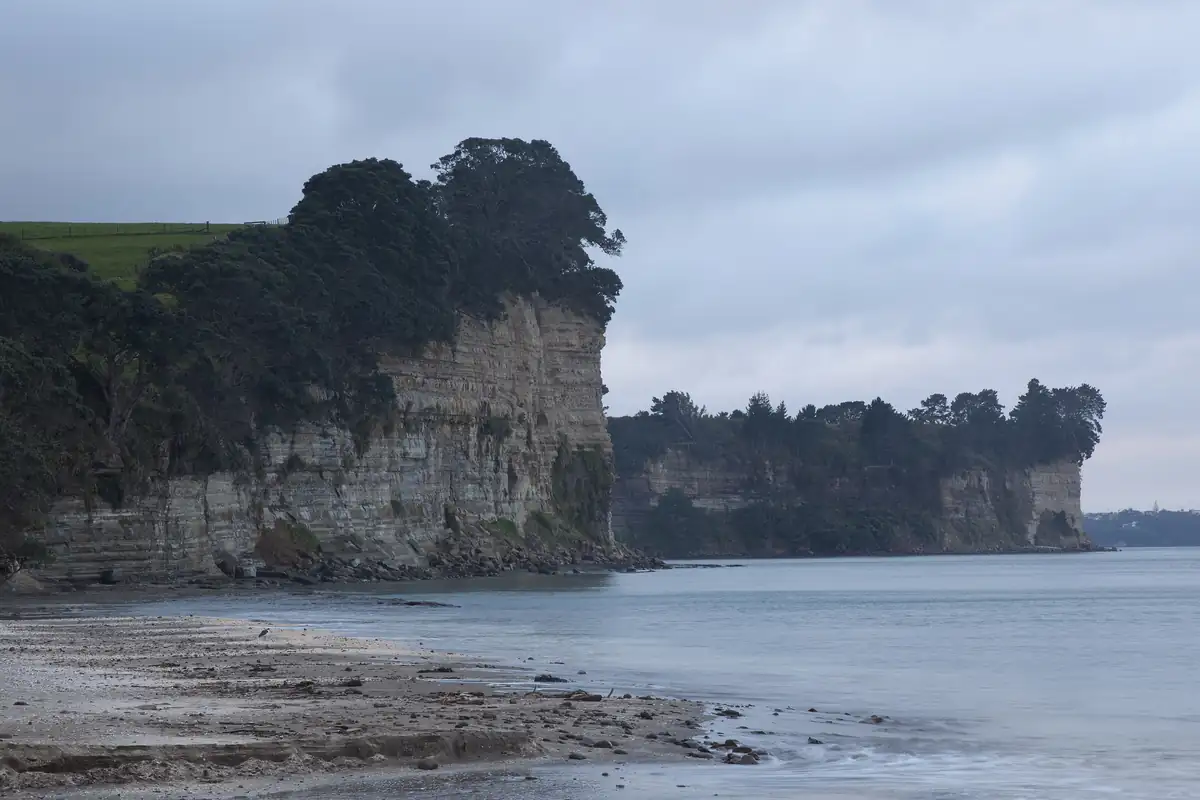

Straight answerThe East Coast Bays run along the Hauraki Gulf from Castor Bay to Long Bay: Mairangi, Murrays, Rothesay, Browns, Waiake and Torbay in between. Wasp nests here are shaped by the coast. Sandstone cliff tops and reserve banks hold ground nests, pohutukawa and flax along the walkways hold paper wasp combs, and the 1970s and 1980s houses that fill the streets have roof and subfloor gaps.
Cliff tops and coastal walkways
The bays are cut into soft Waitemata sandstone, with eroding cliffs at places like Campbells Bay. Cliff-top reserves and the coastal walkways between bays have dry, sunny soil, flax and pohutukawa: ideal for German wasp ground nests and paper wasp combs. Walkers and dogs disturb them. If a nest is on a council walkway, report it to the council on 09 301 0101.
Houses from the building boom
Most houses in the bays were holiday baches until the 1930s. After the Harbour Bridge opened in 1959, the bays boomed: between 1971 and 1975 they were Auckland's fastest-growing area, and over 3,000 homes went up between 1976 and 1986. Homes from that era often have tile roofs, brick or weatherboard veneers and subfloor vents. Wasps use loose ridge tiles, vents and gaps around downpipes. See wall cavity nests.
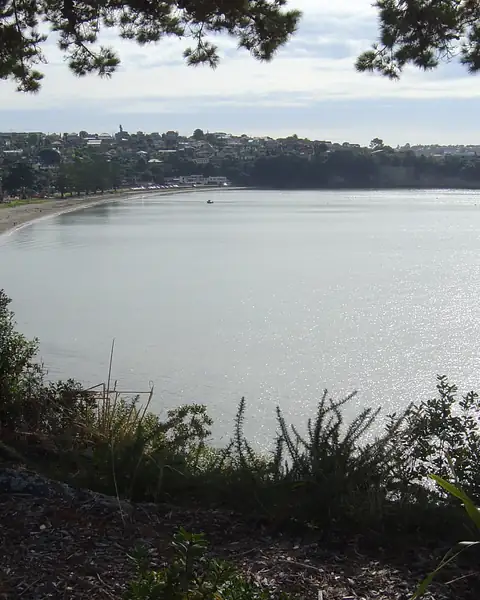

- FromCastor Bay to Long Bay
- GroundSoft sandstone cliffs
- Boom1970s and 1980s homes
- North endLong Bay Regional Park
Long Bay and the northern end
Long Bay Regional Park, opened in the early 1970s as one of Auckland's first regional parks, marks the northern end. Newer subdivisions behind Long Bay date from the 1990s onward. Homes next to the park and the Okura bush edge see more ground nests in paddock-like banks than those on the older streets.
Steep sections and sea views
Many sections drop steeply to the sea or to a reserve. That makes the job harder when the nest is down the bank or under a cantilevered deck. Tell us about steps, slopes and how to get to the back of the property. Decks over a slope are a common nest spot; read decks and pergolas.
The old baches
A few original baches and small timber cottages from the bays' holiday days still stand between newer houses. They were built light: thin cladding, open eaves, and floors close to the ground. German wasps get into their walls and subfloors easily, and paper wasps hang combs under their low eaves. Owners often find the nest when they open up a wall to renovate; stop work and have it treated first.
Okura and the northern edge
Beyond Long Bay, the Okura River and its estuary edge the suburbs with bush and farmland. Homes on this northern fringe have more ground nests in paddock-style banks and more German wasps foraging from the bush. Walkers on the coastal track between Long Bay and Okura sometimes meet nests on the path edge. Keep dogs on a lead there in late summer.
What it usually costs
One nest in the bays normally lands in the published Auckland range of about $120 to $350. Front hedges and low eaves are at the bottom. Nests down a steep bank, under a high deck or in a two-storey roof go higher. These are guide figures. The written quote after the visit sets your price. Cost guide.
Booking a visit in the bays
Tell us the bay, the street, where the nest is and whether it is on a slope. A pest controller comes to the property and quotes before treating. If wasps are on a shared walkway or school ground, say so: it changes who should book it. Quote page.
Every other suburb is covered as well. Go back to wasp nest removal Auckland for prices, timing and the booking steps.
Questions people ask
There is a wasp nest on the coastal walkway. Who should I call?
Report nests on council walkways and reserves to Auckland Council on 09 301 0101. Keep walkers and dogs away from it if you can.
Do you cover Torbay, Waiake and Long Bay?
Yes, every bay from Castor Bay to Long Bay, plus Okura and the North Shore behind them.
Can a nest under a deck over a slope be reached?
Usually, yes. It takes longer, which shows in the written quote. Tell us about access when you call.
Sources we checked
- East Coast Bays (Wikipedia)
- How to control pest animals (Auckland Council)
- Life cycle of a wasp (Manaaki Whenua Landcare Research)
- Asian paper wasp (Manaaki Whenua Landcare Research)
Last reviewed 2026-11-05.