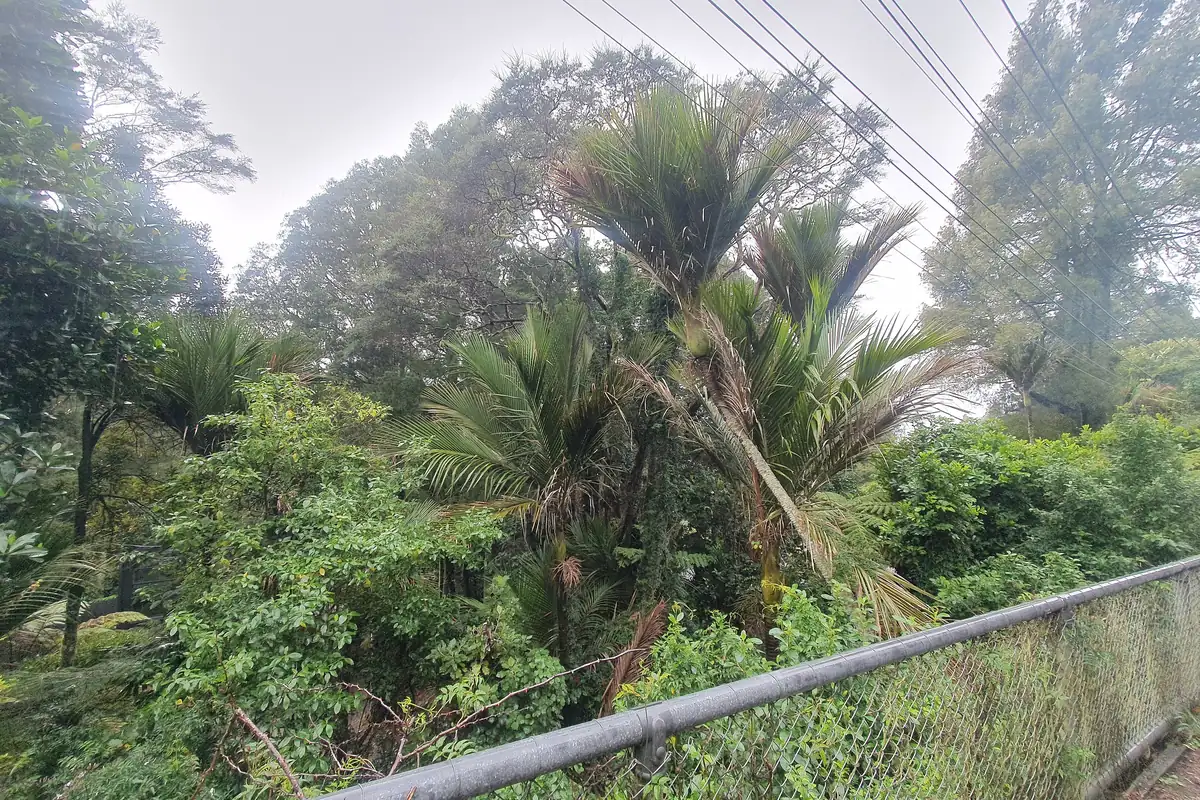

Straight answerTitirangi is the bush suburb: homes tucked among native trees at the southern end of the Waitakere Ranges, running down to the Manukau Harbour. That makes it heavy German wasp country. Expect ground nests in clay banks and under tree roots, nests in the voids under pole houses, and wasps stripping honeydew in the bush. Steep driveways and narrow roads shape every visit.
Why the bush edge has so many wasps
German and common wasps reach some of the highest densities in the world in New Zealand bush, where they feed on honeydew and native insects. Landcare research in beech forest found 8 to 34 nests per hectare. Titirangi's bush is not beech, but kanuka, regrowth and old trees still feed big wasp populations, and every bush section has banks, logs and hollows to nest in.
Houses in the trees
Titirangi grew as a township in the 1910s around the building of Scenic Drive, and suburban growth sped up in the 1960s. Houses are often built within the bush, and some sit on poles to spare tree roots. The dry, sheltered space under a pole house or a high deck is a favourite German wasp site. Look for wasps flying in under the floor line. Nests under decks covers this.
- Under pole houses and high decks: dry, sheltered ground nests
- Clay banks cut for driveways and paths: ground nest holes
- Hollow trees and old stumps: German wasp nests, sometimes big
- Eaves among trees: paper wasp combs in the shade line
Kauri dieback and the reserves
Te Kawerau a Maki placed a rahui over the forested Waitakere Ranges in December 2017, and the regional park closed in May 2018 to protect kauri, with hygiene stations and soil rules on open tracks. Some tracks have since reopened. A nest on reserve or park land is for Auckland Council to deal with, on 09 301 0101; Urban Ark, the local conservation group, points people to the same number. Respect closures and clean footwear wherever you go.
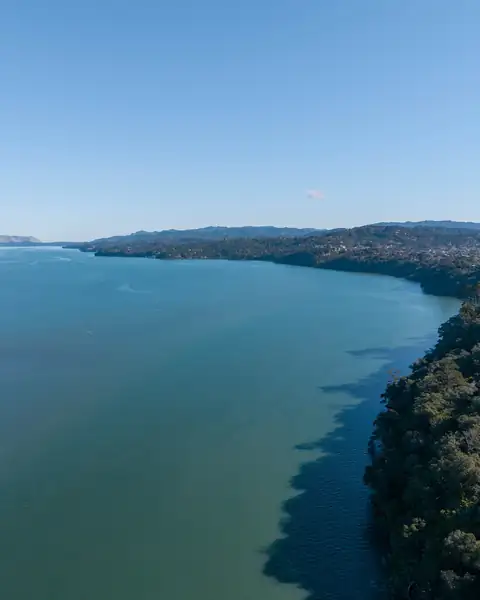

Ground nests on steep sections
Sections here are rarely flat. Clay banks cut for driveways and paths dry out in summer and are classic nest sites, often right where people walk. The nest can be in the bank above head height or below the path edge. Note where the wasps go in and keep people off that stretch of path. Ground nests explains the signs.
- SettingSouthern Waitakere Ranges
- HousesBuilt among the bush
- Nest sitesClay banks, pole-house voids
- ReservesCouncil: 09 301 0101
Getting there: roads and driveways
Narrow, winding roads, shared right-of-ways and long, steep driveways are normal in Titirangi, Laingholm and Waima. Tell us whether a van can get to the house, where to park, and how many steps there are to the nest. A nest down a bush slope may need the pest controller to work from a safe spot above it.
Studios, sheds and outbuildings
Titirangi has long been home to artists, writers and musicians, and many properties have a studio, workshop or garden shed down the path from the house. Outbuildings that are used now and then are where German wasps settle unnoticed: in a gap under the floor, behind cladding or in stored materials. Open them carefully after a break, and watch the outside for a flight line first.
Wasps and the birds in the bush
Wasps compete with native birds for honeydew and insects. Landcare research found that tui, bellbirds and kaka change their behaviour when wasps strip the honeydew. Bush-edge households often care about the birds as much as the stings. Treating nests on your own section is one small, direct thing you can do for the bush around you.
What Titirangi visits cost
Per nest, the published Auckland range of about $120 to $350 applies. A comb by the front door is a short job. A ground nest down a steep bank, a nest under a pole house, or several nests on a bush section takes longer, and the quote reflects that. Use these figures as a guide only; you get your real price in writing first. Cost guide.
Booking in Titirangi
Send the road, the access details and where the nest is. If wasps are coming inside a bush-surrounded house, keep that room shut and read wasps in the house. A local pest controller comes to you and quotes on the spot. Request a quote.
Every other suburb is covered as well. Go back to Auckland wasp nest removal for prices, timing and the booking steps.
Questions people ask
Are wasps worse in Titirangi than in the city?
Bush edges give wasps more food and more nest sites, so nests on bush sections are common. We don't have suburb counts, but Landcare's work shows how dense wasps can get in New Zealand bush.
The nest is in the reserve below my house. Can you treat it?
Nests on council reserve or park land are the council's to deal with. Report them to Auckland Council on 09 301 0101.
Do you cover Laingholm, Huia and Green Bay?
Yes. We cover the whole Waitakere edge from Green Bay out to Huia, and the rest of West Auckland.
Sources we checked
- Titirangi (Wikipedia)
- Kauri dieback closures: what you need to know (OurAuckland, Auckland Council)
- Control wasps (Urban Ark, Waitakere)
- Economic and social impacts of wasps (Manaaki Whenua Landcare Research)
- Life cycle of a wasp (Manaaki Whenua Landcare Research)
- How to control pest animals (Auckland Council)
Last reviewed 2026-11-05.