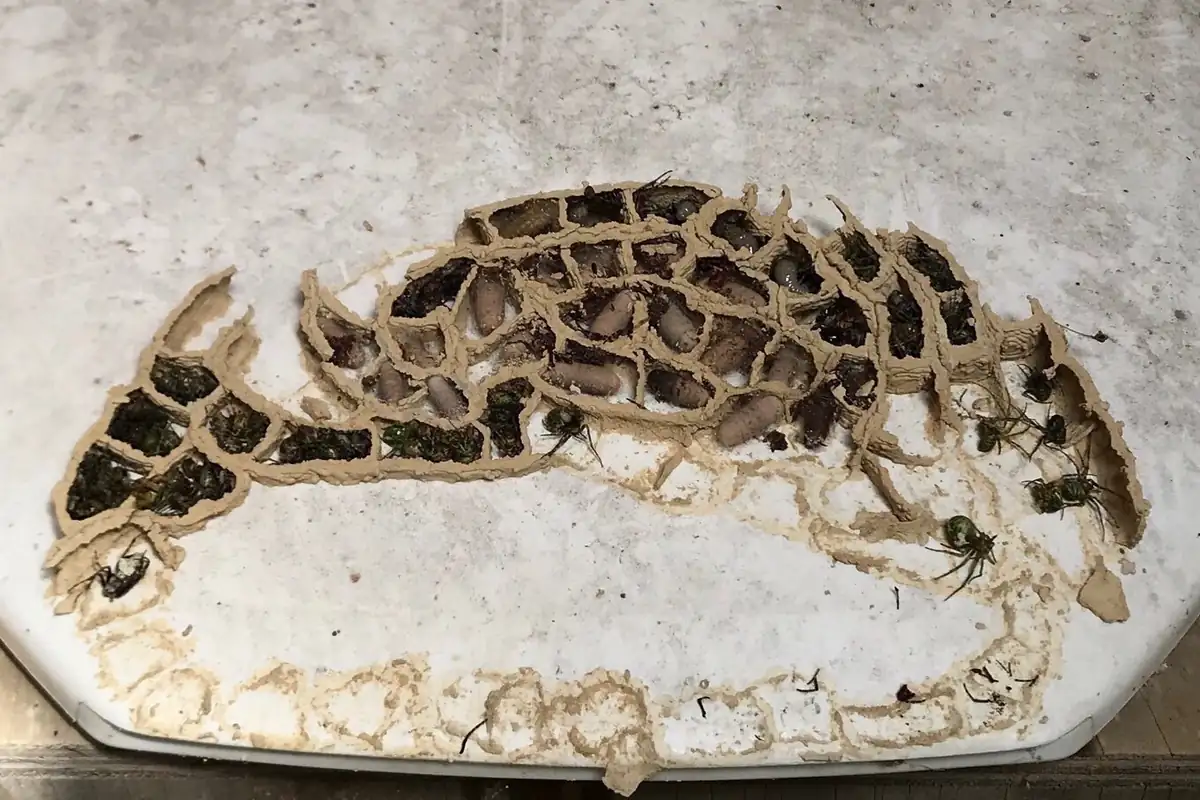
Straight answerSmall mud cells in a curtain fold, keyhole, window track or crack in the wall are almost always the work of the native mason wasp. It is a solitary, fully black wasp that packs each cell with paralysed spiders for its young. It doesn't live in a colony, doesn't defend the nest and is very unlikely to sting. No pest control is needed.
What does a mason wasp nest look like?
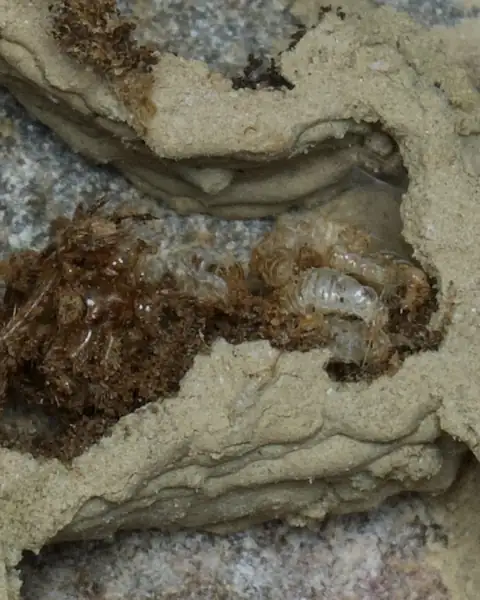
A mason wasp nest is a small tube or lump of dried mud, about 20 mm long per cell, sometimes several cells in a row. Landcare Research says the female builds them in curtain folds, keyholes and building cracks. Broken open, a cell holds small orb-web spiders and a single wasp larva. Nothing about it looks like the paper of a pest wasp.
What does the mason wasp look like?
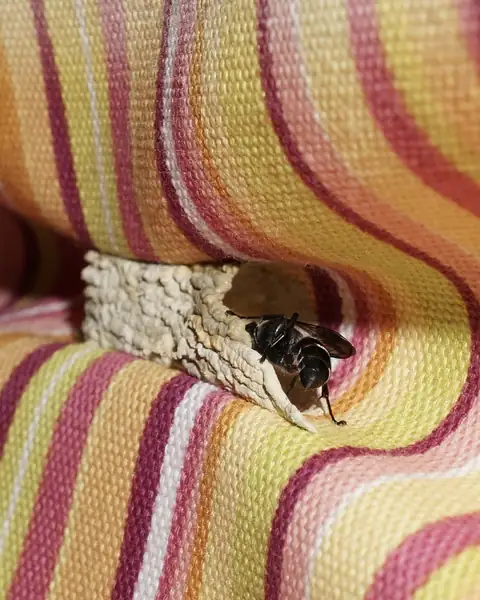
The native mason wasp, Pison spinolae, is fully black and slender, with a thin waist. It is often seen carrying a ball of mud or a spider, or hovering at a window track. You may hear a high whine as it works the mud into shape. Adults feed on nectar.
Why does it stock spiders?
The spiders are food for the larva. The female stings each spider to paralyse it, packs several into a cell, lays an egg and seals it with mud. The larva eats the spiders, pupates, and a new wasp chews out. That means mason wasps help keep spider numbers down around your house.
Can mason wasps sting?
They can sting, but only if you grab or squash one. A mason wasp has no colony to defend, so it won't chase you the way German wasps defend a nest. If one is indoors, guide it out with a glass and card or open the window.
Should you remove a mason wasp nest?
You don't need to, and there is nothing to spray. If the mud cells are on a curtain, a door track or a window you use, you can brush them off. Check first whether a wasp is still working on them, and wait until she has gone if you can. Clean the mud away with a damp cloth. Don't use insecticide.
Mason wasp or a different wasp?
If the nest is mud, it is a mason wasp or a related solitary wasp. If it is grey or brown paper, it is a pest wasp. A grey open comb with wasps on it is a paper wasp, and a covered paper ball or a busy hole is a German or common wasp. See what a wasp nest looks like and identify wasps.
- Mud tube or lump: mason wasp, leave it or brush it off
- Open grey comb: paper wasp, a sting risk near doors
- Covered paper nest or busy hole: German or common wasp, call for help
Got a nest at your own place rather than a question? See wasp nest removal in Auckland for what a visit involves and what it tends to cost.
Questions people ask
Are mason wasps native to New Zealand?
Yes. Pison spinolae, the mason wasp people see most, is native and found throughout New Zealand, according to Landcare Research.
Will mason wasps come back to the same window?
They often use the same kind of sheltered spots each year. If you would rather they didn't, close curtains properly and keep window tracks clear in summer.
Do mason wasps damage the house?
No. The mud cells sit on the surface and brush off. They don't chew wood or make holes.
Sources we checked
- Mason wasp (Manaaki Whenua Landcare Research)
- Mason wasp nest (Manaaki Whenua Landcare Research)
- Wasps (Department of Conservation)
- Wasp identification (Manaaki Whenua Landcare Research)
Last reviewed 2026-11-05.