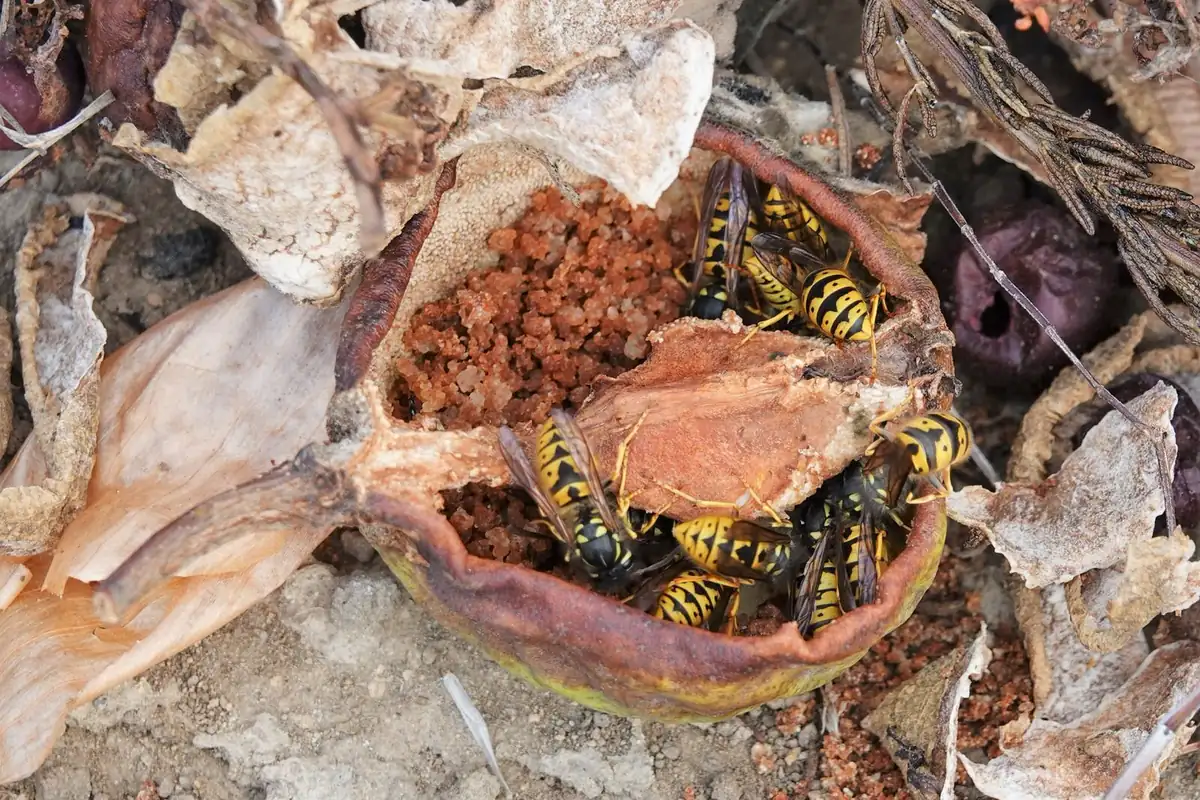
Straight answerWasps eat two kinds of food. Adults run on sugar: nectar, honeydew, ripe fruit and sweet drinks. The grubs in the nest need protein, so workers hunt insects and spiders and scavenge meat to feed them. German and common wasps take both, which is why they turn up at barbecues and fruit trees. Paper wasps mainly hunt caterpillars.
Protein: food for the grubs
Wasp larvae are fed chewed-up insects. Workers hunt caterpillars, flies, spiders and other invertebrates, and scavenge dead animals and meat. Landcare Research says wasps eat about 1.4 to 8.1 kg of invertebrates per hectare per season, and near Hamilton they took an estimated 12,000 to 75,000 prey items per hectare. That is a lot of native insects.
Sugar: fuel for the adults
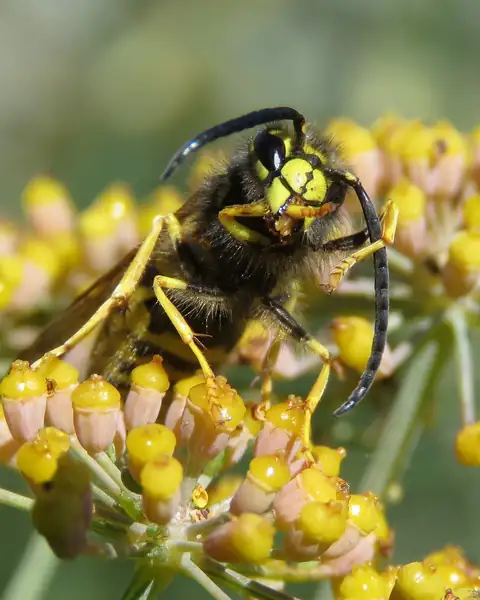
Adult wasps can't digest solid protein well, so they fuel themselves with sugar. In native bush that is mostly honeydew from scale insects; in gardens it is nectar, fruit and anything sweet. In honeydew beech forest, Landcare says wasps cut the honeydew available by more than 90% for months, taking food from tui and bellbirds.
Why they come for your food in late summer
Late summer is when nests are biggest, so demand is highest. Workers hunt hard for protein for the grubs, and from about mid-January wasps take protein baits such as Vespex readily, which is when that bait works. Sugar demand stays high too, and ripe fruit is everywhere. Your sausages, ham, juice and fizzy drink fit both menus.
- Meat, fish and pet food left outside
- Open cans and bottles of sweet drinks
- Fallen and split fruit under trees
- Uncovered bins and compost
What paper wasps eat
Paper wasps mainly hunt live caterpillars and other insects, plus nectar, honeydew and fruit. That is why they don't take meat baits like Vespex. Monarch butterfly growers often lose swan plant caterpillars to them. They are less of a nuisance at the dinner table than German wasps.
Keeping wasps away from outdoor meals
Cover food and drinks, and serve meat last. Use cups with lids or straws, and check cans before you drink. Pick up fallen fruit. Keep bins closed and away from where you eat. Feed pets inside. These steps help, but if wasps keep coming in numbers, there is a nest nearby. Find the nest and deal with it.
Are wasps useful at all?
In their home ranges, wasps help control insects. In New Zealand, introduced German and common wasps reach some of the highest densities recorded anywhere, with no natural enemies and mild winters, and they compete with native birds and insects. DOC treats them as a serious pest. Native solitary wasps are a different story: leave them be.
Got a nest at your own place rather than a question? See Waspari for what a visit involves and what it tends to cost.
Questions people ask
Do wasps eat other insects?
Yes. Workers hunt caterpillars, flies, spiders and other insects to feed the grubs. Landcare Research found wasps take large numbers of native invertebrates.
Why do wasps like meat?
The grubs need protein. Workers carry chewed meat and insects back to the nest. Demand for protein peaks from about mid-January in Auckland.
Do wasps make honey?
No. Wasps don't store honey. They take sugar from flowers, honeydew and fruit, and they rob honey from beehives.
Sources we checked
- Wasp impacts on biodiversity (Manaaki Whenua Landcare Research)
- Life cycle of a wasp (Manaaki Whenua Landcare Research)
- Vespex FAQ (Merchento)
- Wasp numbers explode after long hot summer (2025) (University of Auckland)
- Asian paper wasp (Manaaki Whenua Landcare Research)
- Wasps (Department of Conservation)
Last reviewed 2026-11-05.