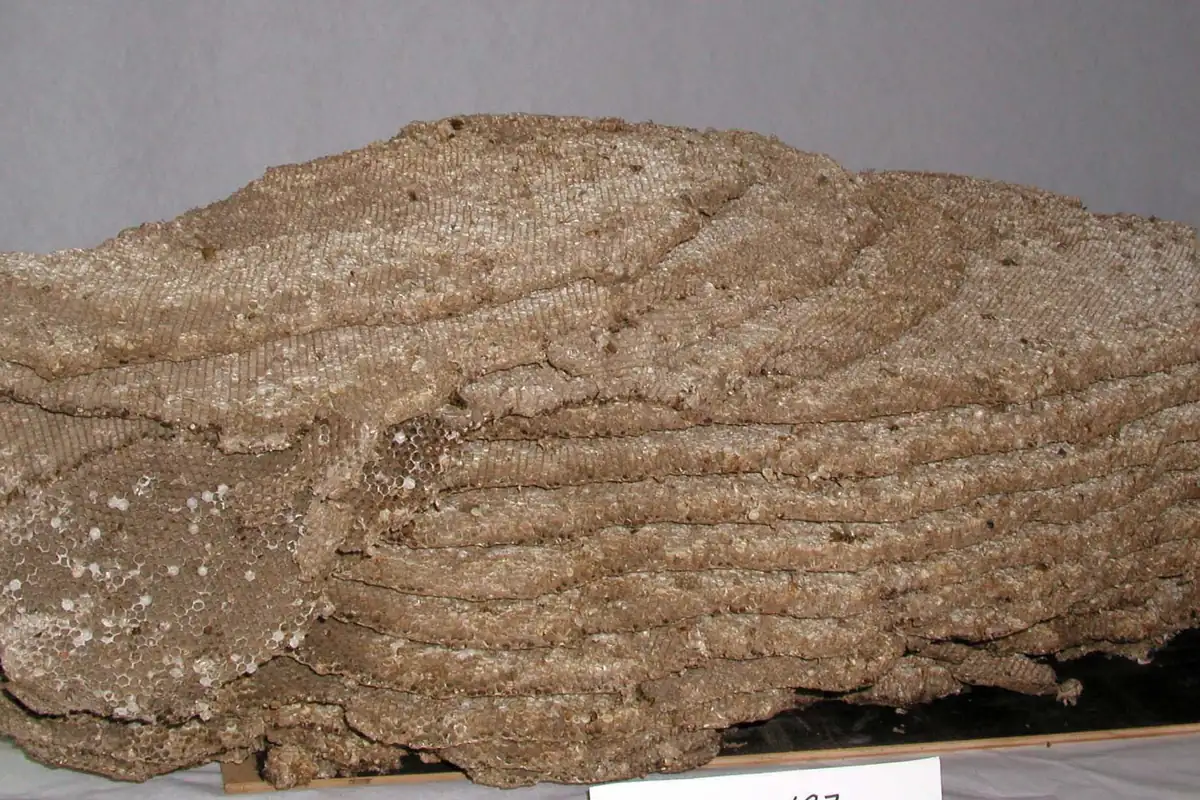

Straight answerWatch it from a safe distance on a warm afternoon for ten minutes. An active nest has wasps flying in and out of one entrance, and an open comb has wasps on it. An old nest is silent, dry and often faded or crumbling. German and common wasp nests are used for one season and are not reused, so a silent nest in winter or spring is almost always dead.
The ten-minute watch
Pick a warm, still afternoon, stand 5 to 7 metres away and watch the entrance. Active German wasp nests have a steady stream of wasps in summer: several a minute or many more. In cool weather or early spring the traffic is lighter, so watch longer. No wasps in or out on a warm afternoon usually means the nest is dead.
Signs of an active nest
Movement and sound are the giveaways. Look for wasps landing at and leaving the entrance, fresh grey or brown paper, wasps on the outside of the envelope, and a hum if you are close enough to hear it from a safe spot. On a paper wasp comb, look for wasps on the cells and white capped cells or grubs.
- Wasps going in and out of one hole: active
- Fresh, crisp paper and a neat entrance: probably active
- Wasps on an open comb, white caps on the cells: active
- Silent, faded, torn or crumbling paper: probably old
Do wasps reuse old nests?
German and common wasps don't move back into an old nest. Each spring a queen starts a new one from scratch, though she may choose a similar sheltered spot. The exception is a nest that never died: Landcare says about 10% of German wasp nests survive winter and carry on. That is a live nest, not a reused one.

Found a nest in the roof space
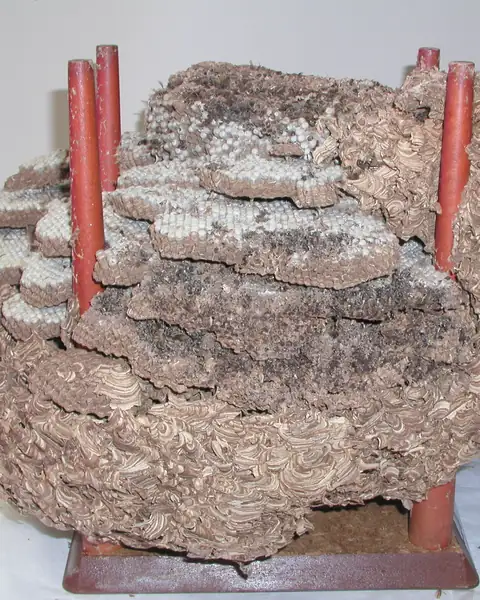
Old wasp nests are often found in roof spaces during insulation or repairs. If it is silent, dry and there are no wasps around the roofline outside, it is very likely old. If you hear buzzing or see wasps at the roofline, treat it as active and leave the roof space. See wasp nests in roofs.
What to do with an old nest
A dead nest is harmless dry paper. You can leave it in a roof or wall, or take it down if it is in the way. Wear gloves, check there are no live wasps first, and bag it. Dead wasps inside can still sting briefly if handled. Seal the gap it used so a new queen doesn't pick the same spot next spring.
When an old nest is worth a second look
If you find an old nest in spring, check the area around it for a new one. Queens often choose similar spots, and a starter nest is small and easy to miss. Spring queens explains what to look for. If it turns out to be active, published Auckland prices run about $120 to $350 per nest as a guide.
Got a nest at your own place rather than a question? See help with a wasp nest anywhere in Auckland for what a visit involves and what it tends to cost.
Questions people ask
Is it safe to remove an old wasp nest?
If it is truly dead, yes. Watch for ten minutes on a warm day first. Wear gloves, check for live wasps, and bag it. If in doubt, leave it or ask a pest controller.
Do paper wasps reuse their combs?
Paper wasp colonies also die off in autumn, and new queens usually build new combs in spring, often in the same kind of sheltered spot.
Can an old wasp nest attract new wasps?
We found no good evidence that an old nest draws new queens. Sheltered spots do, which is why sealing the gap matters more than removing the old nest.
Sources we checked
- Life cycle of a wasp (Manaaki Whenua Landcare Research)
- Wasp FAQ (Manaaki Whenua Landcare Research)
- Wasps (Department of Conservation)
- Asian paper wasp nest (Manaaki Whenua Landcare Research)
Last reviewed 2026-11-05.