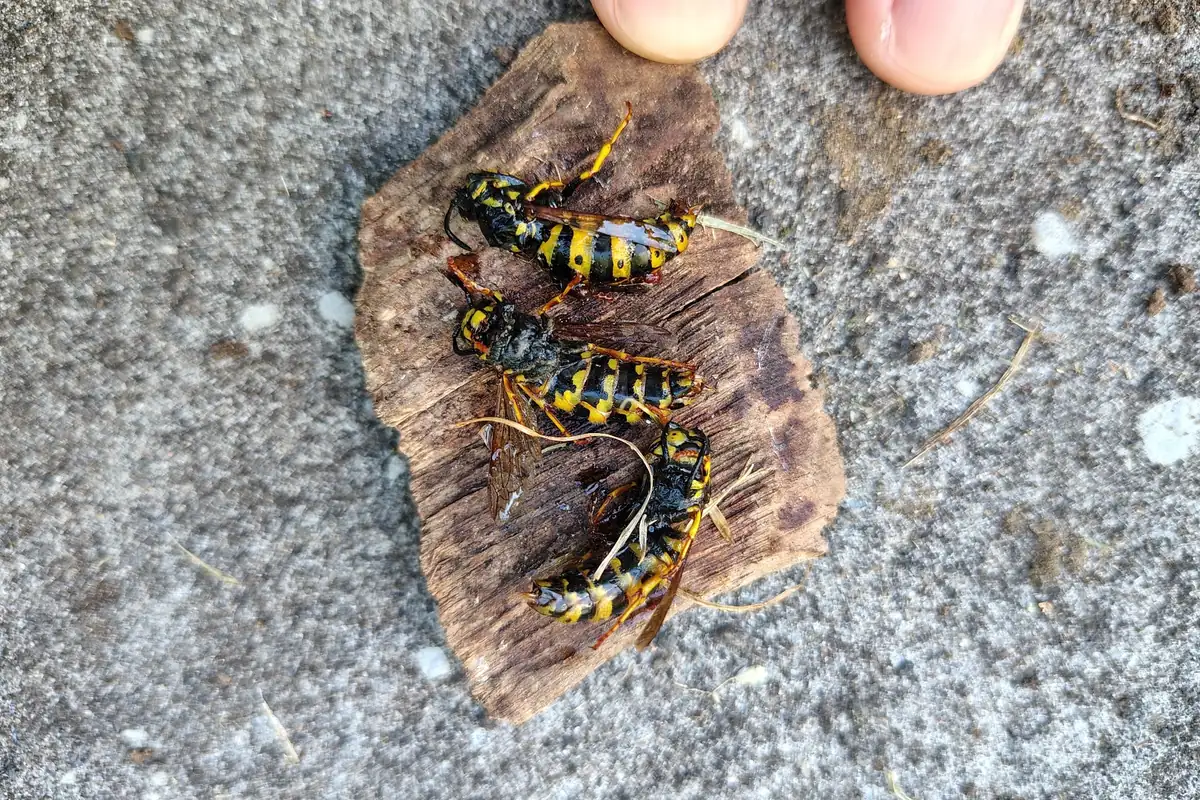
Straight answerAerosol wasp sprays kill the wasps they hit, but they rarely reach the comb inside a covered nest. Insecticide dust puffed into the entrance works better on German and common wasp nests, because wasps walk through it and carry it inside. DOC describes that method for single, easy nests, done after dark. Whatever you use, it must be a registered product used exactly as its label says.
Why aerosol sprays often fail on a nest
A German wasp nest sits behind soil, cladding or a paper shell, often well back from the entrance. A spray hits the wasps at the door and the outside of the nest, not the queen and brood inside. The survivors are alarmed and defend the area. Sprays are better suited to a single wasp or a small, open paper wasp comb you can fully cover.
How insecticide dust works
Dust is puffed into the entrance hole so wasps walk through it going in and out. They carry it into the nest on their bodies, and it spreads through the colony. DOC's method is about a dessert-spoonful at the entrance after dark, and it names permethrin-based dusts. Most colonies die within a day; repeat if wasps are still active.
Landcare's safety rules for DIY
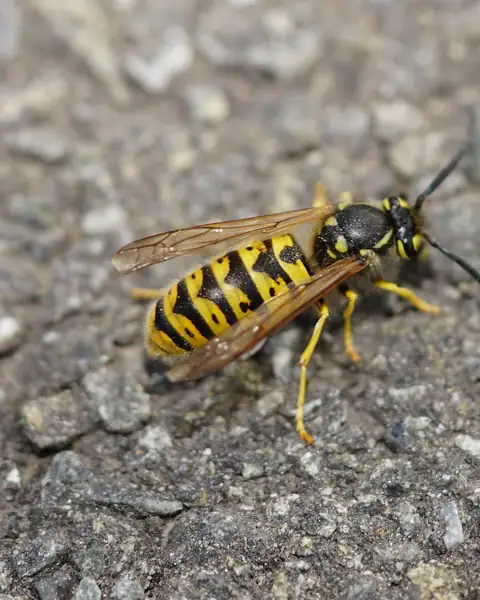
Landcare Research sets clear limits. Don't try it if you're unsure, if the nest is hard to reach, if there's no quick escape route, or if you might be allergic. Use only products registered in New Zealand, and read the label. Dust only works dry, so avoid wet weather. Work at night, fully covered, with a red-covered torch, and back off if wasps come out. The full method is on our DIY page.
The label is the rulebook
Every insecticide sold in New Zealand has to be approved under the Hazardous Substances and New Organisms Act 1996, and its label sets out how it may be used, stored and disposed of. Read it before you start: what it is registered for, how much, where, and the safety gear. Keep products locked away from children and pets, and away from drains and waterways.
What about foams and nest killers?
Foams and "nest killer" aerosols have a longer reach and more coverage than a standard fly spray, and some work on open paper wasp combs. They still struggle with nests inside walls, roofs or underground, where the comb is out of reach. If you can't see or reach the comb, a spray won't either.
- Small open paper wasp comb you can reach from the ground: a spray or foam may work, at night
- Ground nest with one clear entrance: dust at the entrance after dark
- Nest in a wall, roof, under a floor or up a ladder: call a pest controller
- Anyone allergic in the house: call a pest controller
What a pest controller does differently
Experience finding the real nest, the right protective gear, professional products and dusting tools that reach further into cavities. For nests in walls and roofs, they may treat from inside the roof space as well. Published Auckland prices run about $120 to $350 per nest as a guide. See how removal works.
Got a nest at your own place rather than a question? See Waspari for what a visit involves and what it tends to cost.
Questions people ask
What is the best wasp killer in New Zealand?
For a covered German wasp nest, a registered insecticide dust at the entrance after dark, used to its label, is the method DOC describes. We don't recommend brands. For a nest in a wall, roof or up high, a pest controller is safer.
Can I spray a wasp nest during the day?
It is riskier. In daylight foragers are out and the colony is active. DOC and Landcare both point to working after dark, when most wasps are home and calm.
Is wasp dust safe for pets?
Insecticides are hazardous substances. Follow the label, keep pets and children away from the treated entrance, and ask the pest controller when it is safe for pets to go near.
Sources we checked
- Wasps (Department of Conservation)
- Wasp control (Manaaki Whenua Landcare Research)
- Hazardous Substances and New Organisms Act 1996 (NZ Legislation)
- Wasp FAQ (Manaaki Whenua Landcare Research)
Last reviewed 2026-11-05.