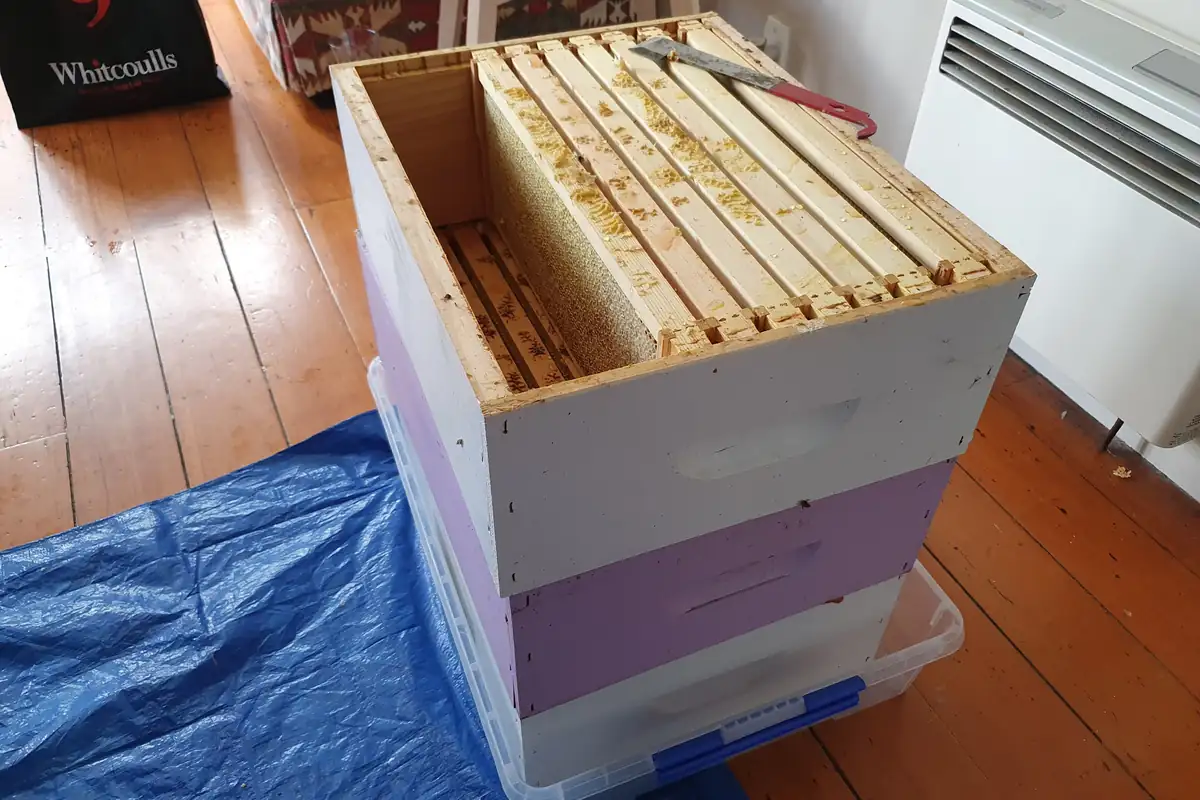

Straight answerGerman and common wasps raid honey bee hives for honey and for bee brood and adult bees as protein. Landcare Research says wasps destroy or seriously damage 8 to 9% of New Zealand hives each year. Weak colonies suffer most, from late summer into autumn. The answer is strong colonies, small hive entrances and finding and treating the wasp nests nearby.
Why do wasps attack beehives?
Wasp nests peak in late summer and autumn, and the colony needs huge amounts of food. A hive is a store of honey and a source of protein in the form of bee larvae and adult bees. German and common wasps raid hives that can't defend their entrance, and once a few find a weak hive, more follow. Nests nearby make the pressure worse.
Signs your hive is under attack
Watch the entrance on a warm afternoon. A few wasps hovering is normal in late summer. Wasps landing and walking straight in, fighting on the landing board, dead bees and wasps on the ground below, and a hive that has gone quiet are warning signs. Robbed hives can be emptied quickly.
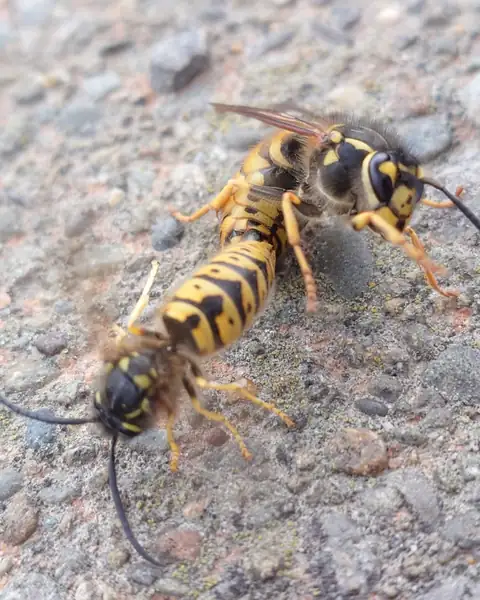
- Wasps landing and going in rather than hovering
- Fights at the entrance and dead bees on the ground
- Wasps leaving the hive heavy and flying straight off
- A light hive with chewed comb and little honey left
Find the wasp nests nearby
Wasps flying back and forth from your hives come from somewhere close. Watch which way they leave and follow the line on a warm afternoon. Banks, hedges, hollow trees and sheds are the usual places. Mark any nest and keep away from it. Treating the nests near the apiary takes the pressure off the hives. How to find a wasp nest covers the method.
Hive care during wasp season
Beekeeping groups advise strong colonies and smaller entrances in wasp season, so the bees can guard a narrow gap. Don't leave honey, comb or sticky equipment open in the apiary, because it trains wasps to the site. Robbing also spreads disease between hives: American foulbrood moves when bees rob weak or infected colonies. Your local beekeeping club is the best guide to entrance reducers and hive management.
What about wasp baits near hives?
Vespex protein bait is designed for German and common wasps and DOC says it doesn't attract bees, because bees don't collect meat. It is sold only to registered approved users, works from about mid-January to mid-April, and must be used in bait stations by the label. Never use sugary homemade baits near hives. The University of Auckland warns they can harm bees. More in traps and baits.
Getting nests near the apiary treated
A pest controller treats the wasp nest entrance, not the hive. Tell them where the hives are so treatment is kept well away from your bees and on the label's terms. Prices for one nest mostly run about $120 to $350 in Auckland; several nests on one block are usually quoted as one job. These are a guide, confirmed in writing. Rural and lifestyle blocks has more.
Got a nest at your own place rather than a question? See wasp nest removal Auckland for what a visit involves and what it tends to cost.
Questions people ask
Do wasps kill honey bees?
Yes. Wasps take adult bees and larvae as protein and steal honey. Landcare Research says wasps destroy or seriously damage 8 to 9% of New Zealand hives each year.
Will treating a wasp nest harm my bees?
It shouldn't, if the pest controller knows where the hives are and treats only the wasp nest entrance, following the product label. Tell them about your hives when you book.
Do paper wasps attack hives?
The hive robbers are mainly German and common wasps. Paper wasps hunt caterpillars and other insects and are not the main threat to hives.
Sources we checked
- Economic and social impacts of wasps (Manaaki Whenua Landcare Research)
- Vespex FAQ (Merchento)
- Wasp control (Department of Conservation)
- Wasp numbers explode after long hot summer (2025) (University of Auckland)
- American foulbrood: what every beekeeper must know (Auckland Beekeepers Club)
- Life cycle of a wasp (Manaaki Whenua Landcare Research)
Last reviewed 2026-11-05.